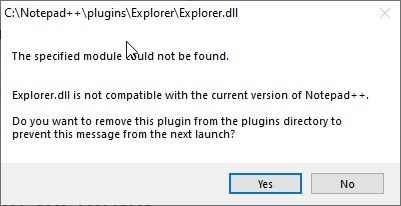
Maybe you wanna describe in more detail how you tried to install
a plugin via the plugin manager. In addition, provide the debug-info,
which is available from the ? menu.
I saw a question about a jinja language but it was locked and I wanted to know if they ended up making one.
What you can do is create a new thread/topic.
Put a link to the old one in the new one.
Use the @user syntax to reference the original poster. Like if their name is FelixTheCat you would put @FelixTheCat somewhere in the posting.
If/when they log in again, the should get a notification and be able to find your thread quickly.
fresh version = portable, downloaded from npp without any modifications and additional plugins
regular version = my portable version - highly customized and with additional plugins
Test was done with npp 7.8.6 (fresh) and 7.8.5 (regular).
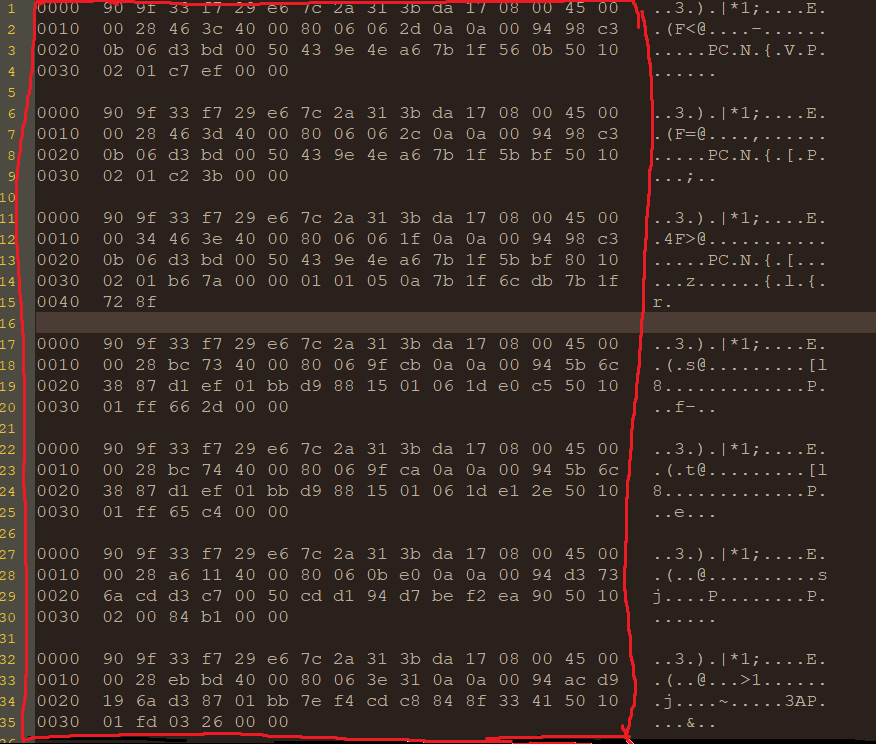
Notepad++ is a text editor and doesn’t handle binary data well.
In your case your real problem will be how to find a program which reads
mp3 and ogg in the same time and plays its content.
What comes into my mind first is using something like cubase with a mixing console.
I use Notepad++ v7.8.5 on Ubuntu 18.04. I run Ubuntu and Windows in dual boot mode.
I was not able to open text files in Windows (automatically mounted onto Ubuntu as /dev/sda3). Below is what I found to be useful.
Open UbuntuSoftware > Find Notepad-Plus-Plus (WINE) > Click on it > Click on Permissions > Find “Read/Write files on removable storage devices” > turn it ON.
Mate. Just wanted to say. Top man. Thank you so much for A) taking the time to reply with a constructive and very helpful reply. and B) you learn something new every day and C) what you suggested worked like a dream. Had one issue as one of the name had a / in it. No dram worked around it.
inserting 6 lines at the beginning of 300 files has started down the slippery slope out of the realm of pure text-editor
Agreed. Maybe that’s why I said it’s an “OK” task for Notepad++ and not “a great” task. :-)
why create an object with the init, rather than just have a T11987() function instead?
It’s just my new framework for scripts (I copy from some boilerplate when I make a new script). Obviously in this case it is fairly trivial, but in scripts that use callbacks a object-based approach has bigger benefits. I picked up on this by observing how @Ekopalypse does some of the more complicated scripts he’s presented. BTW, I picked up on using the topic/posting id in the name of a script/function/class from YOU. :-)
As an addition to what @Michael-Vincent already said: To compile and execute C code you need a C compiler, of course. For simple and quick C test programs I use the Tiny C Compiler (TCC). Its homepage provides a link to the available downloads.
For C++ you could use for example MinGW, the GCC port for Windows, you can download it from here. To get the latest version take the files mingw-w32-bin-i686-YYYYMMDD.7z for compiling 32 bit programs and mingw-w64-bin-x86_64-YYYYMMDD.7z for compiling 64 bit programs where YYYYMMDD is a placeholder for the release date of the version.